
How to Write a CV: A Step-by-Step Guide for Success
A well-written CV (Curriculum Vitae) is your ticket to landing that dream job. It’s your opportunity to showcase your qualifications, skills, and experience in a concise and compelling way. Whether you’re a recent graduate or an experienced professional, crafting the perfect CV can make a huge difference in your job search.
In this comprehensive guide, we’ll walk you through the essential steps to create a CV that stands out. You’ll learn how to highlight your strengths, format your document for readability, and tailor your CV to each job application. Let’s dive into the process!

1. Understand the Purpose of Your CV
A CV is more than just a document that lists your job history. Its primary purpose is to showcase your qualifications and persuade employers that you are the ideal candidate for the job. Think of it as your personal marketing tool.
-
Highlight your strengths: Your CV should focus on your most impressive achievements, relevant skills, and professional experience.
-
Tailor your CV: Different jobs require different skills and experiences. Tailor your CV to fit the specific role you’re applying for by emphasizing the most relevant details.
By understanding the purpose behind your CV, you can approach the writing process with a clear goal in mind.
2. Choose the Right CV Format
The format of your CV plays a critical role in making it easy for hiring managers to scan and understand. There are three main types of CV formats: chronological, functional, and combination.
-
Chronological CV: Lists your work experience in reverse chronological order. This format is ideal if you have a strong work history in the same field.
-
Functional CV: Focuses on your skills and qualifications rather than your work history. It’s a good option if you have gaps in your employment or are changing careers.
-
Combination CV: Merges the best aspects of both chronological and functional formats. This format is perfect for highlighting your skills while still showcasing your work experience.
Choose the format that best suits your career and the position you’re applying for.
3. Start with Your Contact Information
Your CV should begin with your contact information so that employers can easily reach out to you. This section is simple but essential.
Include:
-
Full name
-
Phone number
-
Email address
-
LinkedIn profile (optional, but recommended)
-
Portfolio link (if relevant)
Your contact information should be easy to find and formatted neatly at the top of your CV.
4. Write a Strong Personal Statement
A personal statement, also known as a career objective, provides a brief summary of who you are, your career goals, and what you can offer to the employer. This section is your chance to make a strong first impression.
-
Keep it concise, ideally between 2-3 sentences.
-
Focus on how you can add value to the company and what makes you unique.
-
Avoid generic statements like “I’m looking for a challenging role.”
A well-crafted personal statement can set you apart from other candidates and encourage employers to keep reading.
5. Detail Your Work Experience
Work experience is the backbone of your CV. This section allows you to showcase your professional achievements and the value you’ve brought to previous employers.
-
List your roles in reverse chronological order, starting with the most recent position.
-
For each job, include:
-
Job title
-
Company name
-
Employment dates
-
Key responsibilities and achievements
-
Focus on quantifiable achievements like increased sales, successful projects, or improved efficiency. Employers love seeing concrete examples of your contributions.
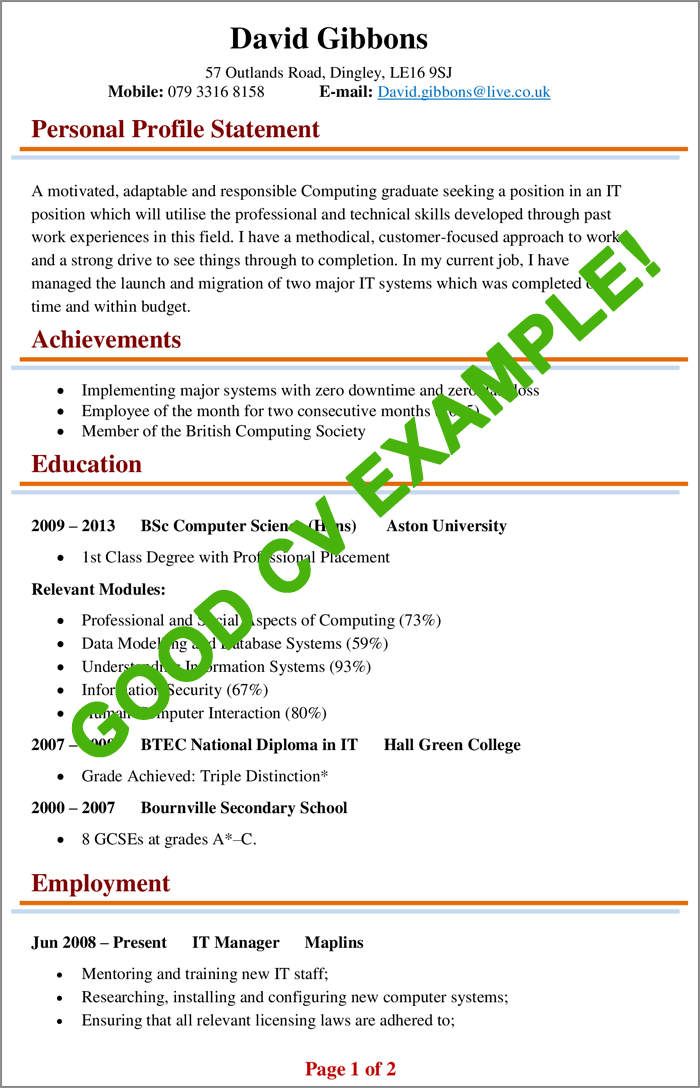
6. Highlight Your Education
Your education section provides a snapshot of your academic background. For most candidates, this will be placed after work experience, but if you’re a recent graduate, you might place it near the top.
-
List your degrees in reverse chronological order.
-
Include the name of the institution, degree obtained, and dates of study.
-
If relevant, mention academic honors, key projects, or coursework that aligns with the job you’re applying for.
While your work experience may be the most critical section for experienced professionals, your educational background is vital for fresh graduates and entry-level roles.
7. Showcase Your Skills
Including a skills section on your CV allows you to highlight specific abilities that are relevant to the job. This section can be organized into hard skills (technical expertise) and soft skills (personal attributes).
Hard Skills:
-
Software proficiency (e.g., Microsoft Excel, Photoshop, or Python)
-
Foreign languages spoken
-
Industry-specific certifications or qualifications
Soft Skills:
-
Communication
-
Problem-solving
-
Leadership
Tailor your skills to the requirements of the job, and provide examples of how you’ve demonstrated these skills in your previous roles.

8. Include Additional Sections (Optional)
If relevant, you can enhance your CV by including additional sections that showcase your strengths further.
-
Certifications: If you hold any relevant certifications or licenses, make sure to list them.
-
Volunteer work: This is particularly useful if you have limited professional experience.
-
Publications: For those in academia or research-based roles, listing your published work is essential.
-
Awards and Achievements: Any significant awards or recognition you’ve received can make your CV stand out.
These optional sections provide a more comprehensive picture of your background and can set you apart from other candidates.
9. Proofread and Edit Your CV
A CV full of spelling mistakes and grammar errors can quickly ruin your chances of landing an interview. Always proofread your CV carefully before submitting it.
-
Check for spelling and grammar mistakes.
-
Ensure the document is formatted consistently, with clear section headings and bullet points.
-
Ask a friend or mentor to review your CV for feedback.
Remember, your CV is your personal brand. A polished document reflects attention to detail and professionalism.
Conclusion: Create a CV That Gets Noticed
Writing a CV that grabs the attention of hiring managers is essential for advancing your career. By following these steps—tailoring your CV, showcasing your achievements, and presenting your qualifications clearly—you can create a document that highlights your strengths and secures the job you want.
For more tips on job applications, automating your job search, or optimizing your resume for better results, visit DUYTHIN.DIGITAL, a platform specializing in tools for automation, SEO, and digital marketing.
Frequently Asked Questions (FAQs)
Q1: How long should my CV be?
A1: Ideally, your CV should be one to two pages long. Keep it concise and focused on the most relevant information for the job.
Q2: Should I include a photo on my CV?
A2: Including a photo is optional and often depends on the industry. If you’re applying for a creative role or working in a country where it’s standard, a professional photo can help personalize your CV.
Q3: Can I use a CV template?
A3: Yes, using a CV template can be helpful, especially if you’re unsure about formatting. Just make sure to personalize it with your information and adjust the content to fit the job you’re applying for.
Q4: How do I tailor my CV to a specific job?
A4: Analyze the job description, highlight the keywords and skills they’re looking for, and emphasize those in your CV. Focus on experiences and skills that align with the role to show you’re a perfect fit.