
Top Jobs in Finance: Opportunities for Career Growth
The finance industry offers some of the most lucrative and stable job opportunities worldwide. From banking to investment analysis, finance professionals are highly sought after, making this sector an excellent choice for those looking to build a rewarding career. Whether you’re just starting out or looking to take your career to the next level, this article explores some of the top jobs in finance, highlighting the skills required, expected salaries, and career progression.
Understanding the Finance Industry
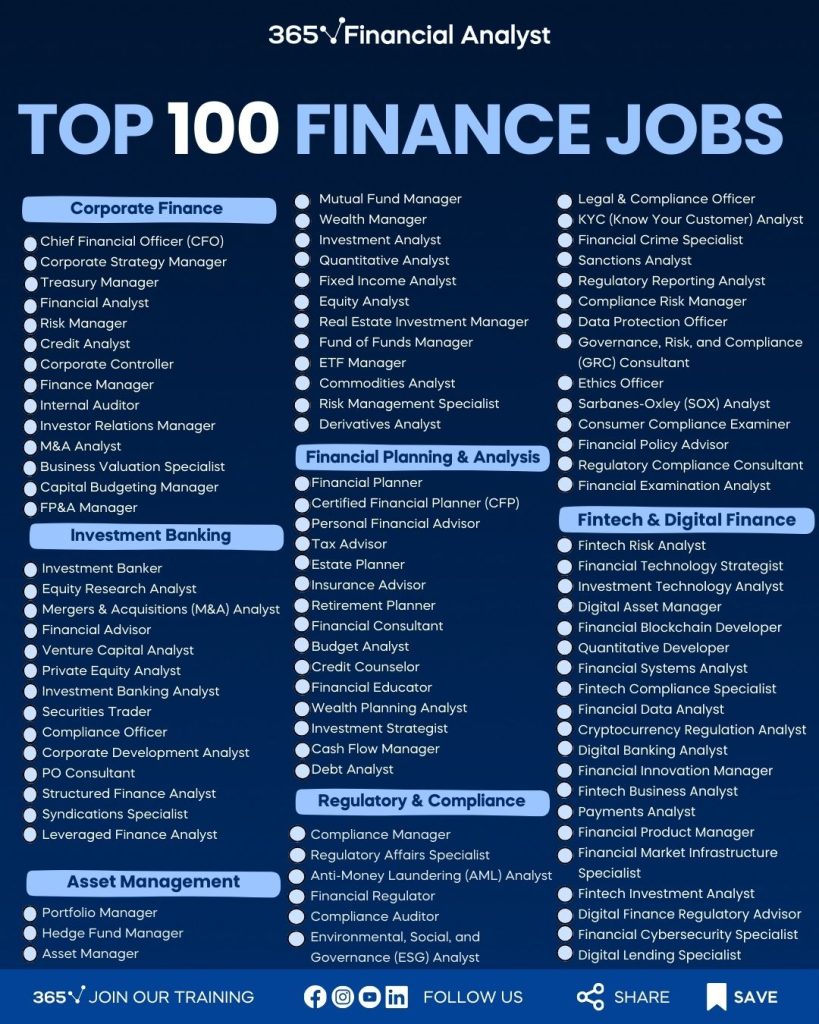
The finance industry encompasses a wide range of roles, from corporate finance and investment banking to financial planning and insurance. It’s an industry driven by numbers, strategy, and the need for sharp decision-making skills. Professionals in this sector play a crucial role in managing money, analyzing investments, and providing strategic financial advice to individuals and businesses.
Why Choose a Career in Finance?
-
High Earning Potential: Finance jobs are among the highest-paying careers, with many roles offering significant bonuses and commissions.
-
Career Stability: The demand for finance professionals remains strong, with opportunities for advancement in almost every sector.
-
Diverse Opportunities: Finance offers a broad range of career paths, including roles in investment, corporate finance, accounting, and financial advisory services.
If you have an analytical mind and enjoy working with numbers, a career in finance could be the right choice for you.
1. Investment Banker
Investment banking is one of the most prestigious and lucrative fields in finance. Investment bankers help companies raise capital, advise on mergers and acquisitions, and manage other financial transactions. It’s a high-stress job but offers significant rewards, especially in terms of salary and bonuses.
-
Roles and Responsibilities:
-
Advise clients on financial strategies.
-
Manage large financial transactions and mergers.
-
Help companies go public by issuing stocks.
-
-
Skills Required: Strong analytical skills, negotiation skills, deep understanding of financial markets.
-
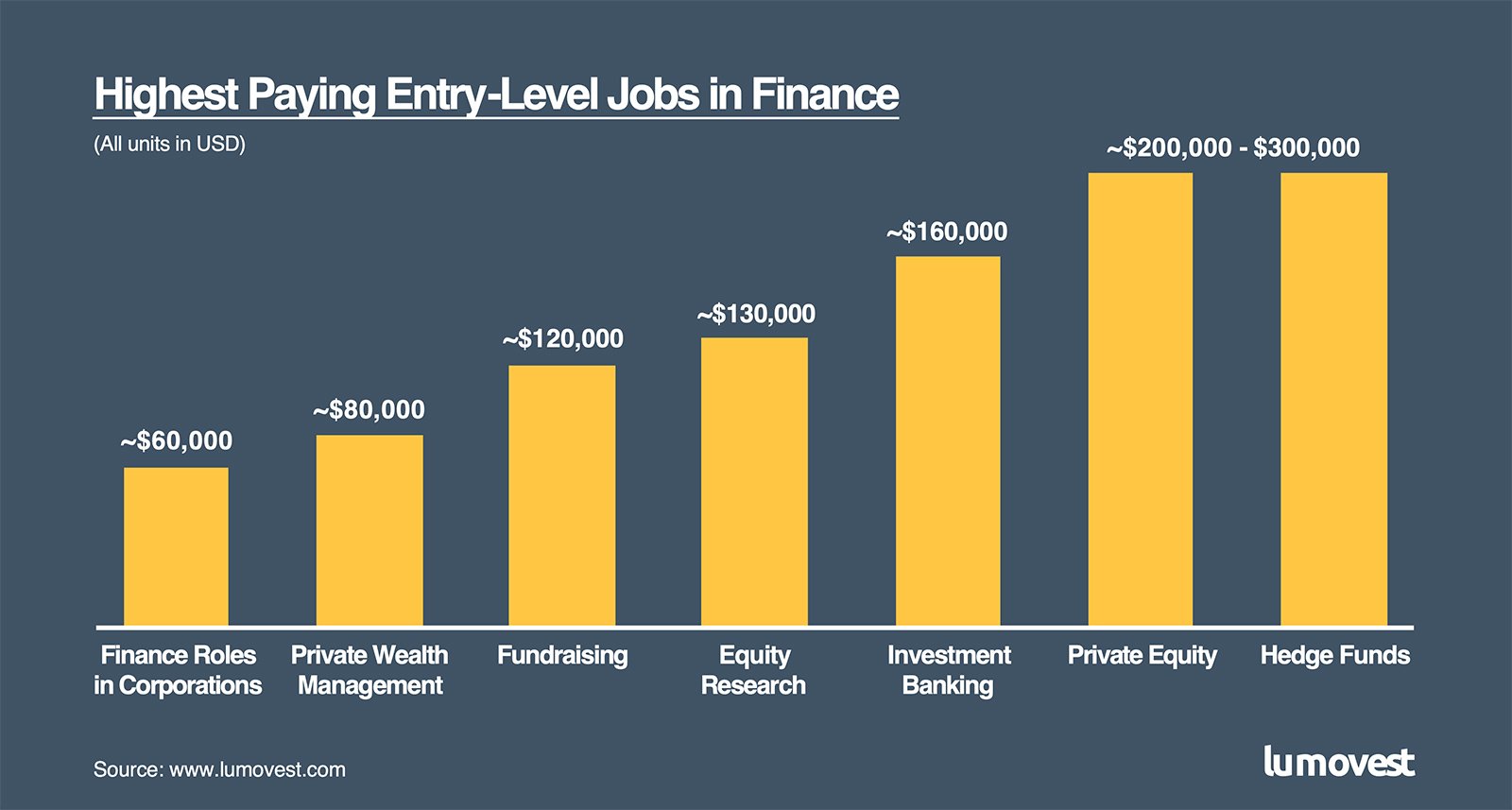
Average Salary: Investment bankers can earn anywhere from $100,000 to over $1 million annually, depending on their level and expertise.
Given the high earnings potential, investment banking continues to attract top talent to the field.
2. Financial Analyst
A financial analyst is a key player in analyzing investment opportunities and helping businesses make informed decisions about their financial activities. This role involves reviewing financial data, preparing reports, and forecasting future financial trends.
-
Roles and Responsibilities:
-
Conduct financial analysis to support investment decisions.
-
Develop financial models to predict business performance.
-
Provide insights on potential investment opportunities.
-
-
Skills Required: Proficiency in Excel, strong attention to detail, excellent problem-solving abilities.
-
Average Salary: The average salary for financial analysts ranges from $60,000 to $120,000 per year.
Financial analysts play an integral part in helping companies grow and make smart investment choices, making it a rewarding career option in finance.
3. Financial Planner
For those interested in personal finance, becoming a financial planner can be an excellent career choice. Financial planners work closely with clients to help them manage their money, plan for retirement, and make smart financial decisions.
-
Roles and Responsibilities:
-
Assess clients’ financial needs and goals.
-
Develop personalized financial plans and strategies.
-
Advise on investments, insurance, and retirement plans.
-
-
Skills Required: Strong interpersonal skills, understanding of tax laws, and investment strategies.
-
Average Salary: Financial planners typically earn $60,000 to $150,000 annually, with the potential to earn more as they gain experience and a larger client base.
This career offers the opportunity to make a tangible impact on clients’ lives while earning a good salary.
4. Chief Financial Officer (CFO)
The Chief Financial Officer (CFO) is a top executive responsible for managing a company’s financial actions. The CFO oversees financial planning, risk management, record-keeping, and financial reporting to ensure that the company remains financially healthy.
-
Roles and Responsibilities:
-
Oversee all financial operations of the company.
-
Provide strategic advice to senior management regarding financial decisions.
-
Manage budgets, forecasts, and financial reporting.
-
-
Skills Required: Strong leadership, strategic thinking, in-depth financial knowledge, and risk management skills.
-
Average Salary: CFOs can earn a substantial salary, often ranging from $150,000 to $500,000 annually, with the potential for significant bonuses and stock options.
As a CFO, you’ll have a significant influence on the direction of the company and will be highly compensated for your expertise.
5. Accountant
Accounting is one of the most common and stable roles in finance. Accountants are responsible for preparing financial statements, ensuring compliance with tax laws, and managing financial records for both individuals and companies.
-
Roles and Responsibilities:
-
Prepare and maintain financial records.
-
Ensure compliance with financial regulations.
-
Analyze financial data and prepare tax filings.
-
-
Skills Required: Attention to detail, strong knowledge of accounting software, understanding of tax laws.
-
Average Salary: Accountants can expect to earn between $50,000 and $85,000 annually, depending on experience and industry.
For those who prefer working with numbers in a more structured setting, accounting offers job security and opportunities for advancement.
6. Risk Manager
Risk management is an essential field in finance, especially for large corporations. Risk managers assess potential risks that could affect the financial health of a company and develop strategies to mitigate these risks.
-
Roles and Responsibilities:
-
Identify and assess financial and operational risks.
-
Develop strategies to reduce exposure to risks.
-
Monitor risk factors and adjust strategies as needed.
-
-
Skills Required: Strong analytical skills, deep knowledge of financial markets, and a good understanding of business operations.
-
Average Salary: Risk managers typically earn between $80,000 and $150,000 annually.
This role requires a strong sense of judgment and the ability to anticipate future challenges, making it a high-level, impactful position.
7. Tax Advisor
Tax advisors help individuals and businesses navigate the complexities of tax laws, ensuring that they comply with regulations while minimizing tax liabilities.
-
Roles and Responsibilities:
-
Provide advice on tax planning and strategies.
-
Prepare tax returns and financial documents.
-
Ensure compliance with local, state, and federal tax laws.
-
-
Skills Required: Knowledge of tax regulations, strong attention to detail, and excellent communication skills.
-
Average Salary: Tax advisors can earn between $70,000 and $120,000 annually, depending on their level of expertise and client base.
This role offers a stable career with a good salary, particularly for those who enjoy working with financial regulations and helping others minimize their tax burdens.
FAQs About Careers in Finance
What qualifications do I need for a finance career?
A degree in finance, accounting, economics, or a related field is typically required for most finance jobs. Many roles, especially those in investment banking or financial planning, may also require certifications such as CFA (Chartered Financial Analyst) or CPA (Certified Public Accountant).
How much can I earn in the finance industry?
Earnings vary significantly depending on the role, location, and experience. Entry-level positions may start at around $50,000, while senior roles like CFO or investment banker can offer salaries exceeding $500,000 annually.
Are there job opportunities in finance for women?
Absolutely! The finance industry offers numerous opportunities for women, with many organizations focusing on gender diversity and inclusion. Women can pursue roles in investment banking, financial planning, accounting, and more.
Conclusion: The Growing Potential of Finance Careers
The finance industry offers a wide array of opportunities for individuals looking to build a stable, rewarding career. From investment banking to financial planning and risk management, there are many paths to success. As the global economy continues to evolve, finance professionals will remain in high demand, offering career stability and opportunities for growth.
Whether you’re just starting your career or looking to make a transition into a new role, the finance sector offers abundant possibilities. Take advantage of the resources available and start exploring your options in the exciting world of finance today.